

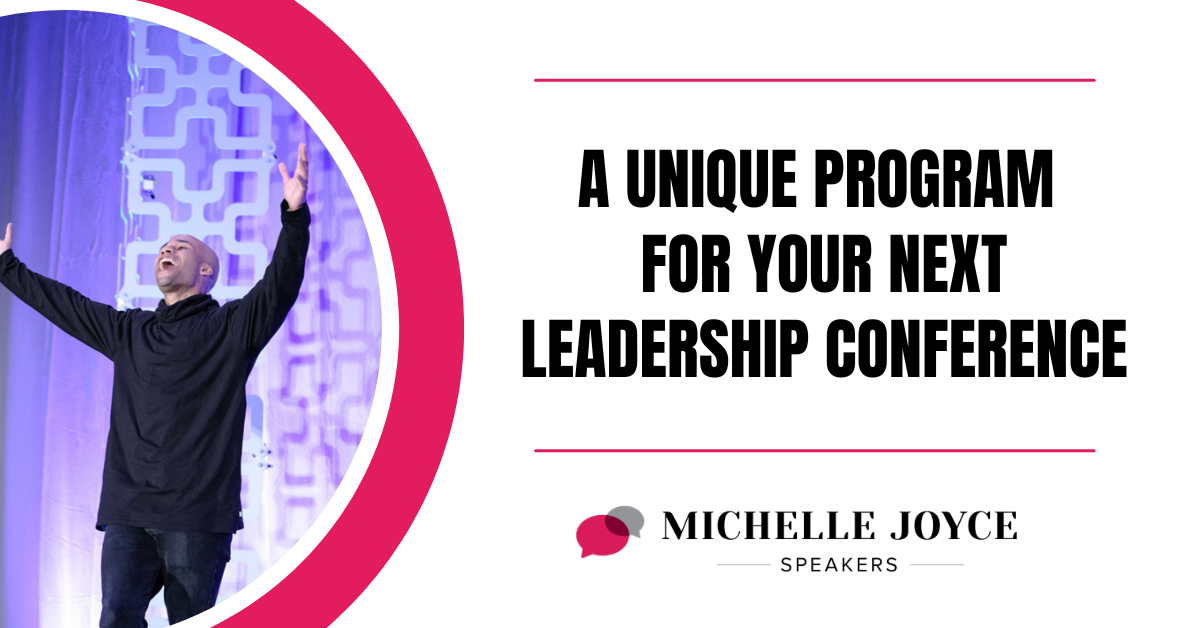
If you’re planning a leadership conference, chances are you already know what you want your audience to walk away with.
You want leaders who think strategically.
Who challenge assumptions.
Who embrace change instead of resisting it.
Who inspire fresh thinking from their teams.
Who can navigate uncertainty, solve problems, and see possibilities others miss.
But here’s the challenge: How do you deliver those messages in a way your audience hasn’t already heard?
That’s where Tucker Bryant comes in.
Tucker is one of the most unique keynote speakers we represent at Michelle Joyce Speakers, and he can be particularly powerful for a leadership audience because he approaches the subject from an entirely unexpected direction.
He doesn’t deliver a traditional leadership keynote.
He helps leaders see differently.
And when leaders see differently, they lead differently.
A Silicon Valley Executive Meets a Nationally Acclaimed Artist
At first glance, Tucker can be difficult to categorize.
He’s a nationally acclaimed artist and a former Silicon Valley executive, two worlds that don’t often collide on the keynote stage.
But that combination is exactly what makes him so compelling.
Tucker understands the creative process required to generate breakthrough ideas. He also understands the realities of business, where those ideas need to translate into decisions, innovation, growth, and results.
His work challenges audiences to examine the assumptions and habitual patterns that quietly limit their thinking.
Because one of the biggest obstacles facing leaders isn’t necessarily a lack of ideas.
It’s becoming so accustomed to the way things are that we stop imagining the way they could be.
Why Creativity Belongs at a Leadership Conference
Most meeting planners don’t wake up thinking, “I need a creativity keynote.”
Instead, they tell us:
We need stronger leaders.
We need fresh thinking.
We need people to embrace change.
We need more innovation.
We need our team to get unstuck.
We need an opening keynote that will set the tone for the entire conference.
Those may sound like different objectives, but there’s a common thread running through all of them.
They require people to think differently.
Leadership today demands more than executing what worked yesterday. Leaders need to question assumptions, adapt to changing circumstances, recognize opportunities, and create environments where their teams feel empowered to contribute new ideas.
Creativity, in that context, isn’t about being artistic.
It’s a leadership capability.
Great Leaders Challenge the Way Things Have Always Been Done
Every organization develops routines.
Some are valuable. Others quietly become obstacles.
“We’ve always done it this way” can be one of the most expensive sentences in business.
Tucker helps leaders recognize the invisible assumptions influencing how they approach their work and gives them practical ways to interrupt those patterns.
What if there’s another way to solve the problem?
What if the obstacle could become an opportunity?
What if the idea that seems impossible is simply an idea no one has explored yet?
What if the leader’s role isn’t always to have the best idea, but to create the conditions for better ideas to emerge?
That kind of thinking becomes especially important during periods of change, growth, disruption, and transformation.
Leadership in the Age of AI Requires More Human Creativity, Not Less
There’s another reason Tucker’s message is particularly relevant right now.
AI can generate information, analyze data, automate processes, and dramatically increase productivity.
But as technology becomes more capable, distinctly human skills become even more valuable.
Curiosity.
Imagination.
Judgment.
Perspective.
The ability to connect seemingly unrelated ideas.
The courage to challenge an assumption.
The willingness to ask a better question.
Organizations don’t simply need leaders who know how to use new tools. They need leaders who know how to think in new ways.
Tucker helps audiences understand how to protect and strengthen the human creativity that will increasingly differentiate great leaders and great organizations.
A Keynote Experience Your Audience Won’t Expect
There’s also a practical consideration for anyone building a leadership conference agenda.
Your audience has probably seen a lot of leadership speakers.
That doesn’t mean you shouldn’t book one. Leadership is one of the most important topics organizations can invest in.
But sometimes the most effective way to reinforce a familiar objective is to approach it from a completely unfamiliar direction.
That’s one of Tucker’s greatest strengths.
He combines storytelling, humor, audience interaction, poetry, and unexpected moments to create an experience that feels very different from a traditional business keynote.
Your attendees aren’t simply listening to someone talk about thinking differently.
They experience it.
And that makes Tucker especially interesting as an opening keynote, where the goal is often to create energy, establish a theme, and encourage attendees to approach the entire conference with a more open and curious mindset.
More Than Inspiration
A unique keynote still needs to deliver business value.
Tucker’s programs aren’t creativity for creativity’s sake.
He gives audiences practical approaches they can use to challenge routine thinking, generate new ideas, navigate change, and bring greater creativity to everyday business challenges.
For leaders, that can mean:
- Recognizing and challenging assumptions that limit progress
- Approaching familiar problems from new perspectives
- Creating an environment where teams feel safe contributing new ideas
- Becoming more adaptable in times of change and uncertainty
- Strengthening the human creativity that becomes increasingly important alongside AI
- Turning fresh thinking into meaningful action and results
That’s why Tucker can fit into conversations around leadership, innovation, change, transformation, growth, future of work, AI and human potential, and high performance.
Sometimes the Best Leadership Speaker Doesn’t Look Like a Leadership Speaker
After nearly three decades of helping organizations find the right speakers for their most important events, I’ve learned that the best match isn’t always the most obvious one.
Sometimes an audience needs the leadership expert.
Sometimes they need the business strategist.
And sometimes they need someone who comes at their challenge from an entirely different direction.
Tucker Bryant is that speaker.
He brings together the mind of a business executive and the perspective of an artist to help people reconsider what’s possible.
Because ultimately, leadership isn’t just about getting people to follow.
It’s about helping people see where they could go next.
And sometimes, a different perspective is exactly what creates the breakthrough.
At Michelle Joyce Speakers, we love helping meeting professionals think beyond the obvious keynote choice and find the speaker who can create exactly the right experience for their audience.
Connect with us here, and tell us about your audience, your objectives, and the experience you’re hoping to create, and we’ll be happy to be a resource.
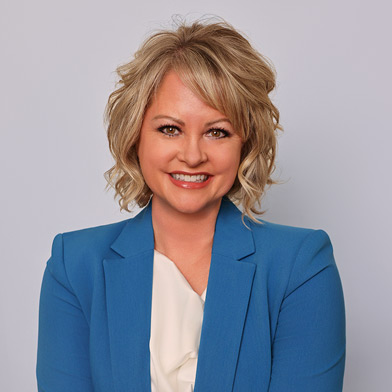
Michelle Joyce has spent nearly 30 years in the professional speaking and corporate meetings industry, helping organizations identify and book keynote speakers for conferences, leadership meetings, sales events and corporate gatherings. She is the Founder and President of Michelle Joyce Speakers and serves on the Executive Board of the Global Speaking Industry Association, where she previously served as President. Michelle is frequently called upon as an industry expert and is passionate about helping meeting professionals find the right speaker for the right audience.